
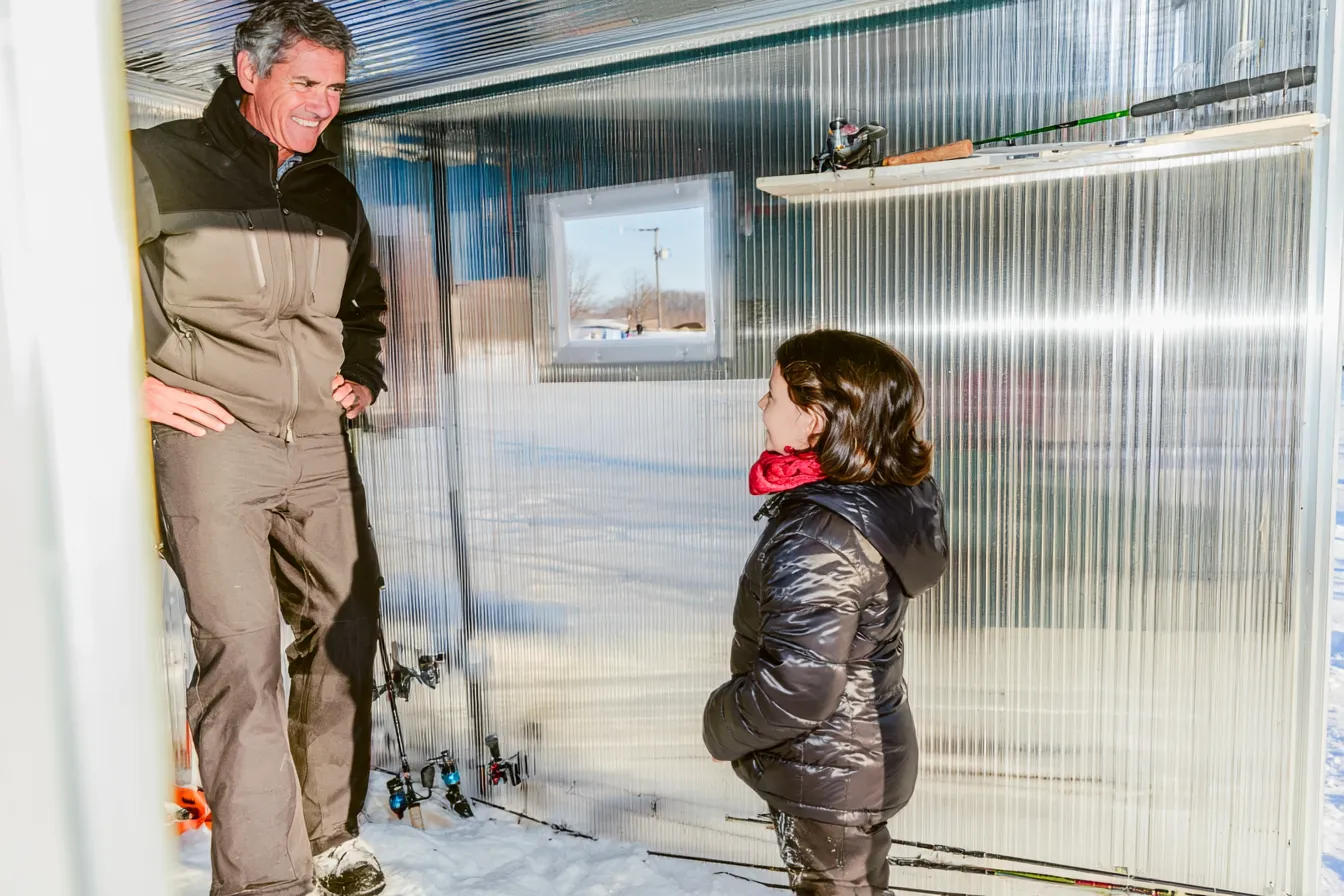
Grandpa Ray has been fishing for most of his life. His granddaughter Lily is nine, and this is her first winter trip.
Lily arrives wearing two pairs of socks and an expression of tremendous seriousness. Her parents have explained that Grandpa Ray knows what he's doing, and that today's outing has been planned with a professional guide who has checked access and ice conditions. Ray still reviews the safety plan with her before they enter the shelter. She listens, then asks where the bathroom is. He admits this is the most practical question anybody has asked all morning. Inside, the space is surprisingly cozy: folding chairs, a little window, tackle laid out in tidy rows, a thermos full of something that smells like cocoa, two enamel camp mugs beside it. Outside the winter lake is broad and almost silent. Ray is patient in a way Lily has not always seen him be at family dinners. He demonstrates the little jigging motion twice and then lets her try. She is impressed that fishing can involve sitting perfectly still and also being blamed for moving too much.
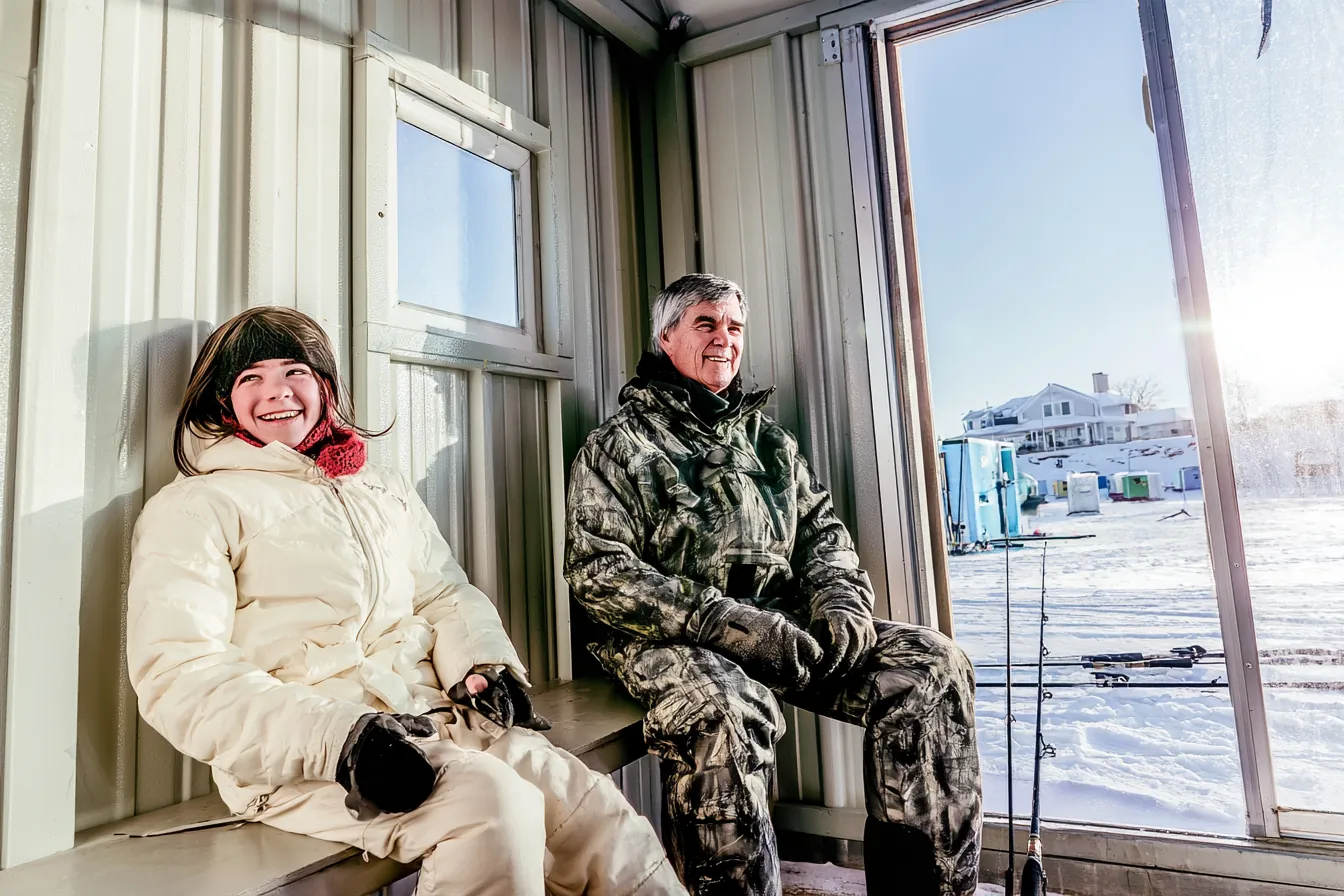
Ray has prepared an entire lecture about tackle but abandons it when Lily asks why every bait container seems to smell terrible. He remembers bringing her mother fishing when she was little, how impatient she was, and how she eventually learned to see a quiet morning as something valuable rather than a problem to solve. Lily is more curious about the shelter's windows and the little pile of extra gloves. She names the two rods after characters from a book she's reading. Ray says a fish probably won't be impressed by their names. Lily replies that the names are for her, not for the fish. As they sit, a faint tapping from the wind moves across the shelter. Ray refills the cocoa and pushes back his two-tone cap, and Lily pulls her hat down over her ears even though the little heater has made the space comfortable. She looks entirely at home.
They begin a running conversation about the private lives of fish. Lily proposes that a perch might have a favorite color. Ray says he'd never considered it. She asks if fish sleep. He gives a more complicated answer than necessary, and she tells him he sounds like her science teacher. Every so often he checks their equipment and their guide's guidance, but mostly he listens. Lily talks about a friend at school who moved away and how nobody seems to understand why she misses having someone to sit with at lunch. Ray remembers the day her mother first walked into kindergarten; he doesn't say that. Instead he asks what the friend liked about Lily, and stays quiet for the answer. When the rod finally gives a small tug, Lily shouts as if the lake itself has answered. She loses the fish, but Ray has seen her face at the moment she felt it. On the way home they stop at Gus' Coney Island in Mount Clemens, and Lily orders for both of them. Back home, he will tell everyone it was a respectable size. Lily will interrupt and say they don't really know. The story will become family property anyway.
Then Ray tells her about the enormous fish he lost in 1987.
Lily asks if he is exaggerating.
"Of course," he says. "That's how fishing stories work."
Setting artwork is illustrative; it does not depict the story’s cast or document an event.