
For most university students, pulling an all-nighter means studying.
At Michigan Tech, some winter nights are devoted to building enormous sculptures out of snow.
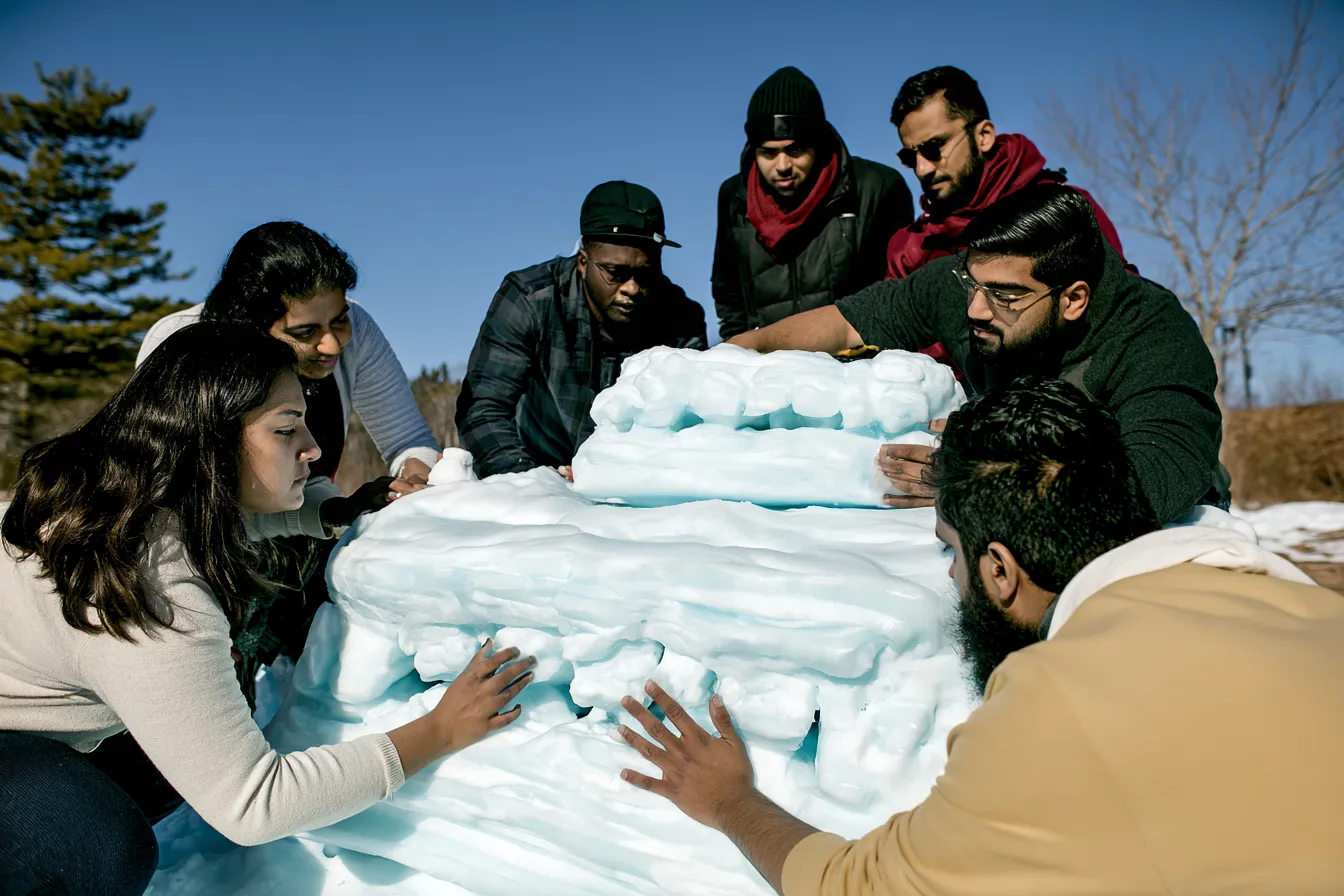
The design starts as a grand idea drawn on a napkin, then becomes a complicated set of calculations nobody completely trusts. Amara is studying engineering and believes the walls need more support. Ravi wants the whole sculpture taller. Jonah has opinions about the lighting, and Elise is determined that every detail should look intentional, even the parts they have to improvise. They have all seen Michigan Tech's Winter Carnival sculptures in photographs, but the work turns out to involve much more hauling, packing and arguing than admiring. By midnight their gloves are damp, the lights throw strange shadows over the snow, and everyone is trying to remember when they last ate. Jonah believes it was a pasty from Roy's, around lunch. Someone puts on music. They take turns warming their hands and discover which of them has never seen this much snow before coming to Houghton. The conversation grows easier as the task becomes harder.
During a short warming break, the group begins comparing the winters they grew up with. Elise describes Midwestern snow days when everyone expected a school closure. Ravi remembers winter as a cooler season rather than an ocean of snow. Amara laughs about how she once believed she could manage Houghton with an ordinary coat. Jonah says the most surprising thing about college here isn't the snowfall; it's how many people go outside anyway. They tell one another stories they haven't shared in class. For a few minutes they forget which academic departments they're in, which grades they need, and who has the most practical plan for after graduation. When they return to the sculpture, they look at it with a little more generosity. They have all brought different ideas of winter to this place, and now they are trying to make one object that belongs to everybody.
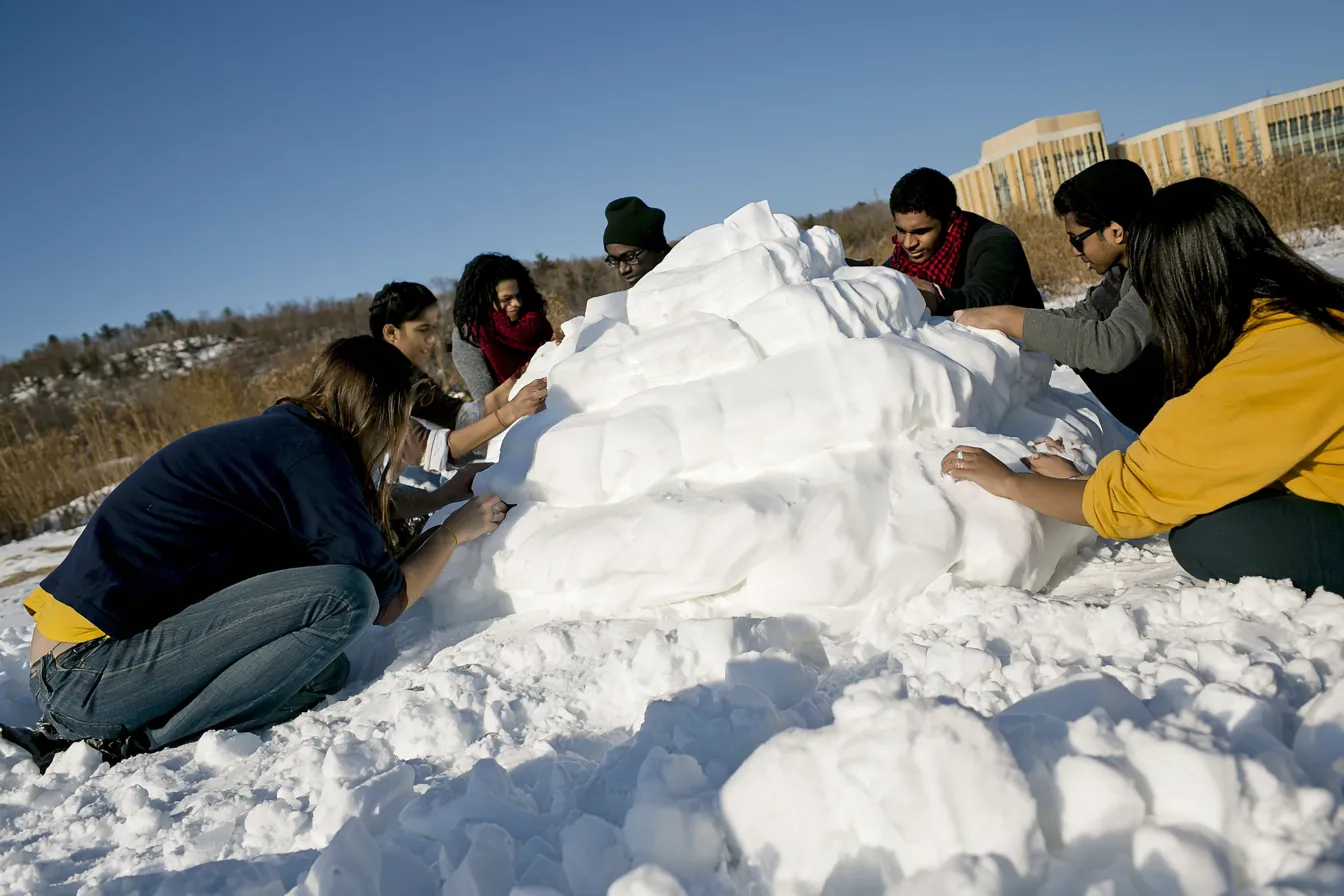
Around two in the morning a section breaks off. There is a long silence while everyone studies the damage. Ravi says maybe the sculpture has become an abstract statement about impermanence. Elise tells him not to use that line in the judging notes. They decide to change the design rather than rebuild it exactly, carving a new curve around the break. The revision makes the whole thing more interesting, though none of them says that immediately. Students from nearby teams stop to offer advice and extra tools. They trade coffee for a spare shovel, discovering that competition does not prevent generosity. At dawn they work more quietly. Snow settles on their hats, including the deer beanie Elise has worn for three days; the college buildings stand pale in the first light. Amara steps backward to see what they've made. It isn't perfectly symmetrical, and it certainly isn't what they drew on the napkin. But it holds together. They stand beside it for a photograph, four people who would never have found themselves in the same room if not for a university in the snow. Then they walk to Suomi Restaurant for Finnish pancakes and eat without speaking. They spend the next day sleeping through messages asking for the group photo.
Years later, nobody remembers the assignment they were avoiding that night.
They all remember the snow.
Setting artwork is illustrative; it does not depict the story’s cast or document an event.