
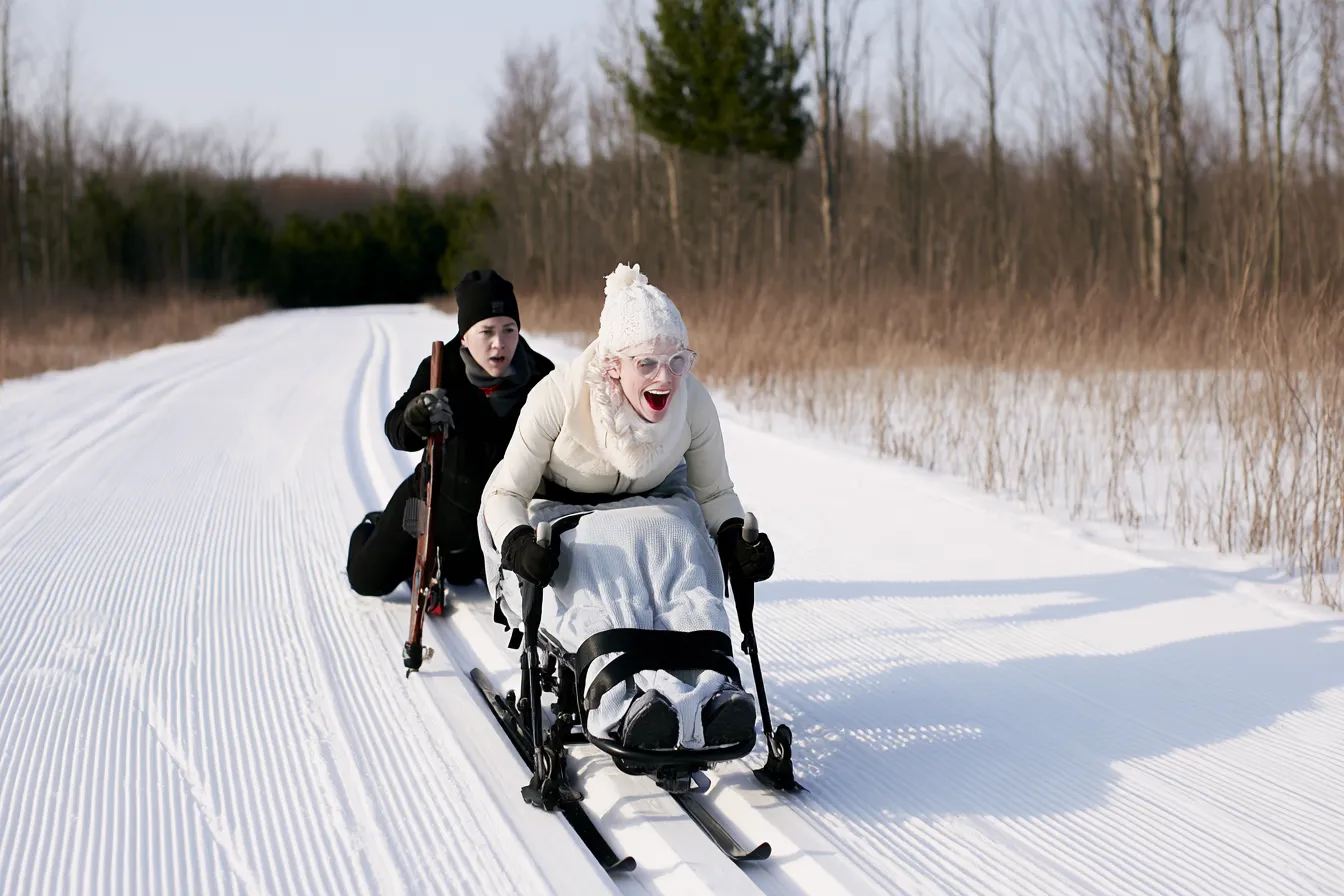
Tasha used to spend every winter on skis. After an accident changed her mobility, she assumed that part of her life was finished.
Her brother wasn't convinced.
For a long time, Tasha resisted even talking about adaptive skiing. The helpful suggestions felt like one more conversation in which everyone else knew what her life ought to look like. She missed speed, but she also missed the ordinary small decisions: choosing a run, making a turn, stopping when she wanted. Her brother Devon knew enough not to book anything without asking first. He sent her information about a program, then waited. Weeks later she called him and said, 'Can you drive me?' The morning of the lesson they arrive early, watching a maintenance crew move across the snow. The instructor asks Tasha about her experience, her goals and what she wants help with. She appreciates being spoken to directly. They check the equipment together and start with a slope that feels manageable. Devon is given a job he can actually do: stay near the meeting area and make sure there is hot coffee afterward. He has already stopped in downtown Brighton, at Brighton Coffeehouse and Theater, and is holding two cups like credentials.
There is a pause before the first real descent. Tasha feels the old nervousness rise: not fear of snow, exactly, but fear that disappointment might arrive disguised as a lesson. She can remember the particular cold of a chairlift seat through winter pants, the excitement of spotting a groomed run below, the way her younger self used to race friends back to the lodge. None of those memories guarantees today will work. The instructor gives her choices rather than predictions. They practice turns and stopping again, talking through what she feels through the equipment. Tasha asks to repeat a movement until it becomes hers. Nearby, other visitors are taking beginner lessons of their own, each starting from a different set of assumptions. Watching them, she relaxes a little. Everyone on a slope is learning something, even the people who look as though they have never fallen in their lives.
It takes a few minutes for the movements to come back. She remembers what it felt like to make a turn by leaning into it, then realizes the new equipment asks her to trust her body in a slightly different way. She doesn't want a crowd at the bottom celebrating every foot of progress. What she wants is another run, and then one after that. The instructor reads the difference and adjusts the session accordingly. A patch of blue sky opens behind the lift. Snow squeaks under the skis, cold air catches at her cheeks, and for a few seconds her mind is quiet in the way it used to be when she was moving downhill. Later Devon asks if he can take a photograph. Tasha says yes, but only if she looks fast. He says she looks terrifyingly competent. Afterward they take a table at Brewery Becker, in a building that has been taking in cold travellers since 1873, and watch the early dark settle over Main Street. She's pleasantly tired, aware that learning this will take practice, and not particularly interested in making it a story about overcoming adversity. It's a story about going skiing. That is more than enough.
Setting artwork is illustrative; it does not depict the story’s cast or document an event.