
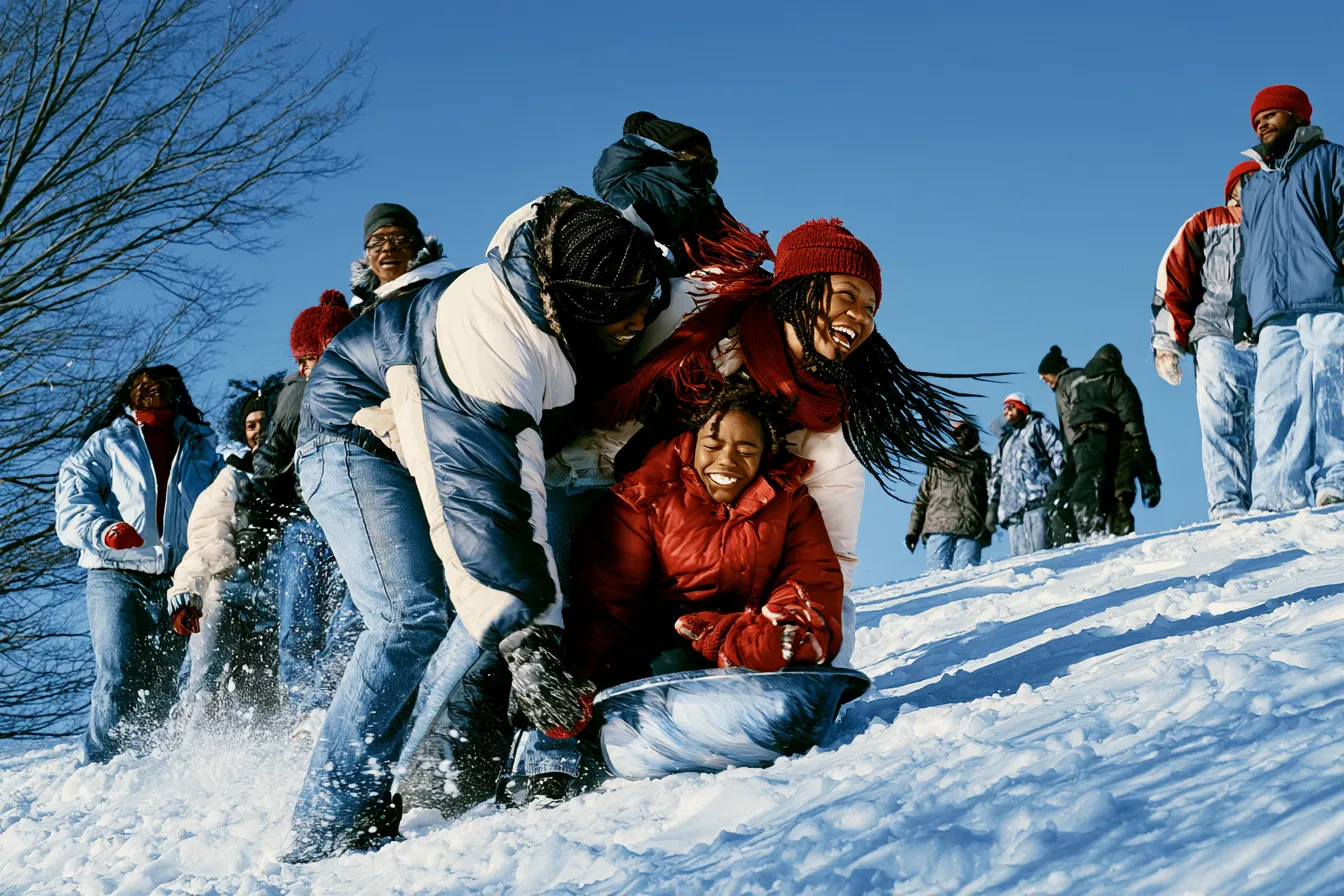
Eight-year-old Isaiah is convinced the sledding hill at Robert C. Valade Park is the tallest mountain in Michigan. His grandmother Lorraine knows better. She grew up in Detroit, raised three children there, and spent more winters than she can count pulling frozen mittens off reluctant little hands.
The wind off the river gets underneath everybody's collars. An uncle is trying to open a folding chair with one hand while holding a toddler with the other; a cousin has brought a sled still bearing a sale sticker from three winters ago. Lorraine stands beside the car taking inventory. Someone has forgotten boots. Someone else has forgotten a hat. And Isaiah, already ankle-deep in snow, is announcing the rules of a race nobody agreed to enter. Lorraine remembers those exact Saturday mornings when her own children were little: the wet upholstery afterward, the arguments about who went first, the way the smallest kid always ended up being carried. She has spent recent winters watching them from the passenger seat. The family doesn't make a fuss about it, which almost makes it easier to keep doing. Today Isaiah asks her to hold the front of his sled while he climbs in. Instead of handing it to his mother, she takes off her gloves and kneels beside him.
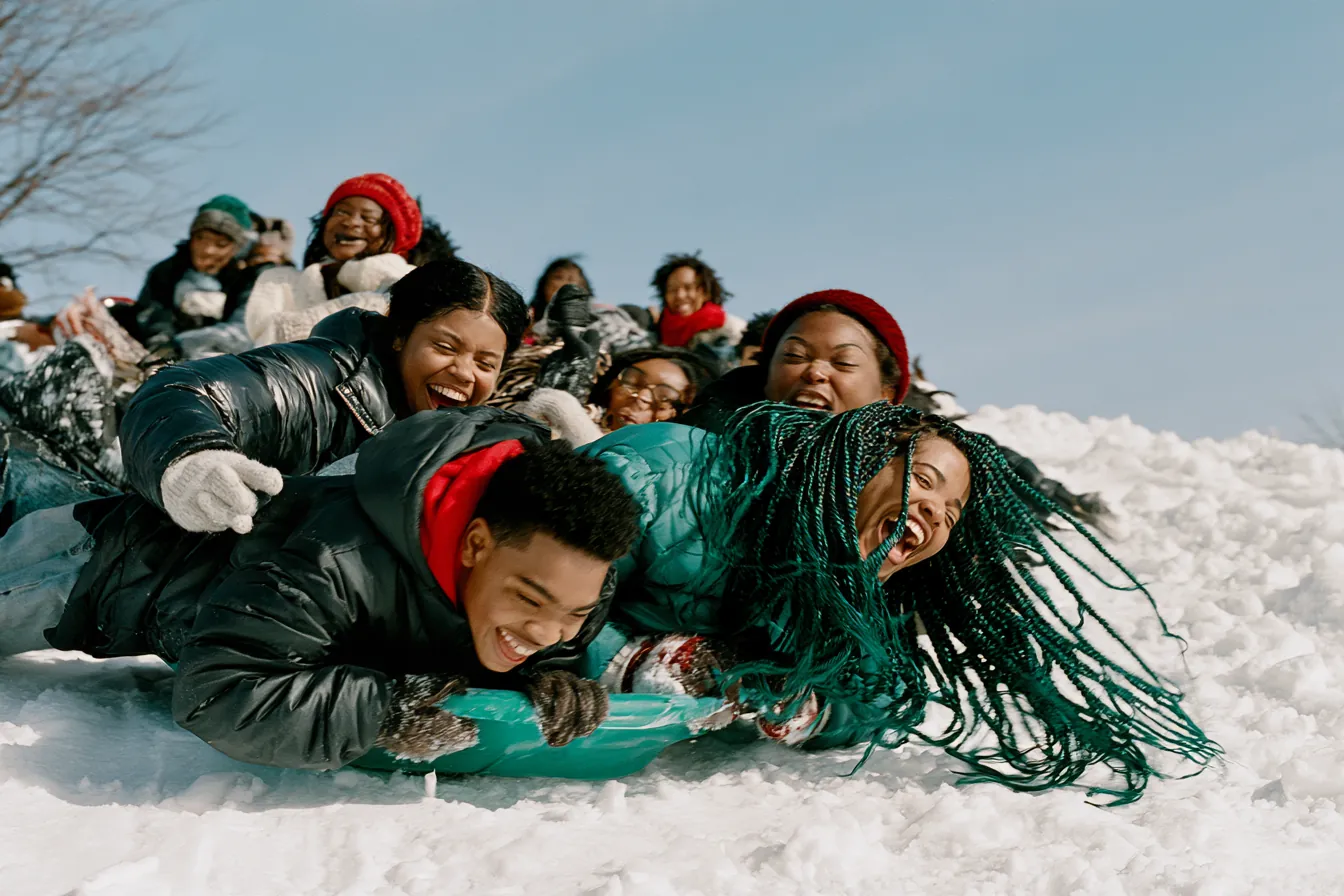
For the first time that day, Lorraine sees her daughter watching her with the same cautious expression she herself used when the children were small. 'You don't have to,' her daughter begins. Lorraine answers that she knows. Isaiah explains the sled's steering system, which appears to consist of leaning in whatever direction seems right and yelling. He has appointed his youngest cousin as official timekeeper. Nobody has brought a stopwatch, so the cousin plans to count very loudly. Lorraine lowers herself carefully onto the sled behind Isaiah, fitting one boot on each side. The plastic creaks. Their family gathers at a respectable distance down the hill, part audience and part emergency committee. 'Ready, Grandma?' Isaiah asks. She thinks about saying next time. Instead she tightens her arms around him and tells him to push off when he's ready. The whole crowd seems to hold its breath for one second.
It's not a graceful descent. The sled veers, strikes a shallow ridge, and turns halfway around. Isaiah shouts instructions that would be useless even if Lorraine could hear them over his laughter. At the bottom, snow has worked its way into her hood and down her neck, the sort of cold she once swore she would never willingly experience again. For a moment the family goes quiet. Then Isaiah throws both arms around her and asks for another run. Lorraine surprises herself by saying, 'After I get my breath.' Her daughter steadies her as she stands. Nobody claps or makes a touching speech. Someone simply hands over the thermos and an enamel camp mug, and a little niece leans against Lorraine's knee waiting for a drink. The day opens up around them: another race, a misplaced mitten, two cousins building a lopsided wall. As the family packs up, Lorraine looks at the little sled and thinks how little it takes to feel invited back into the thick of things. One small hill. One very foolish idea. She is already wondering whether her snow pants are still in the hall closet.
On the way home they stop at Mexican Village Restaurant, and over the menus Lorraine says she hasn't had that much fun in twenty years. Isaiah asks whether they can come back tomorrow.
She says yes before anyone else can answer.
Setting artwork is illustrative; it does not depict the story’s cast or document an event.